Technology Blog
-

Radar and communication could converge for 6G
The mmWave frequency range is highly suitable for sensing and radar purposes due to the short radio wavelength enabling localization and positioning in the mm to cm range. Joint sensing and communication is being discussed, where a communication system not only communicates but also senses the environment and basically uses mmWave radar for the detection…
-
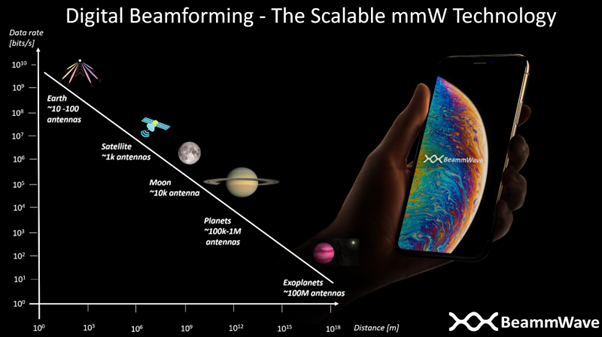
Digital BF the scalable Antenna Technology!
Traditionally when designing analog or hybrid beamforming solutions for mmWave the design has been targeting a single application. A certain antenna panel/array has been designed for a certain purpose, such as a handheld device, and if another mmWave transceiver architecture is needed for another application that needs more antennas, such as a fixed wireless access…
-
Digital Beamforming, the power efficient solution for mobile devices!
We have in our previous posts shown the advantages with digital beamforming over analog beamforming from a performance point of view. Then one may ask; why hasn’t digital beamforming in mobile devices happened yet? Well, if you ask people in the field, they will say that a digital approach has way too high power consumption…
-
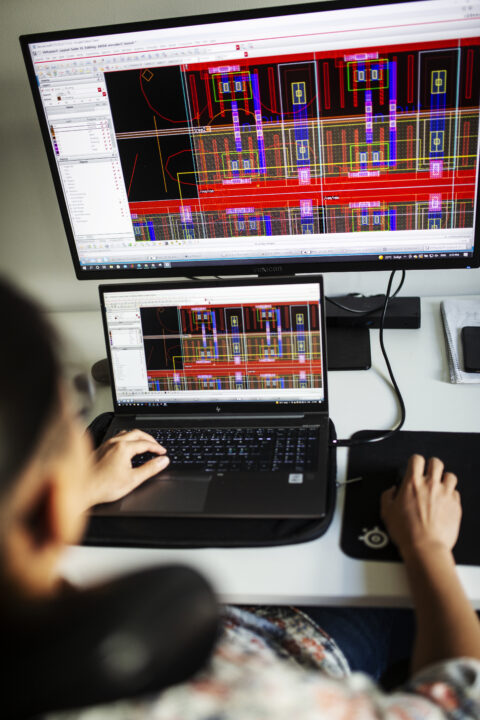
mmWave Radio design for mobile devices
Chips today for consumer electronics are practically all done using a technology known as CMOS (Complementary Metal Oxide Semiconductor, silicon-based). However, for the high frequency parts in a radio transceiver which are present in all communication devices, another technology based on gallium compounds has been considered better suited in terms of high frequency performance. However,…
-

Moving around in the beam space
One of the key features of cellular communication is mobility – this allows a mobile terminal to move around between cells while maintaining an uninterrupted connection to the network. Mobility is important in mmWave communication too and particularly so if mmWave communication is to be successful in offloading traffic from increasingly loaded sub 6 GHz…
-
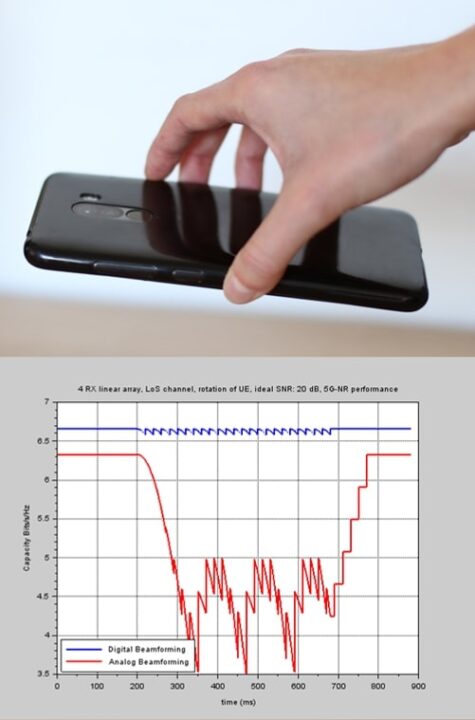
Did you know that a 2021 survey found Americans checked their phones 262 times a day?
The smartphone is in your pocket or on the table. Suddenly you hear a buzzing sound, you pick up the phone and check the chat message you received on your device. A 2021 Reviews.org survey of 1,000 American adults reported an average of 262 phone checks per day, as reported by PhoneArena. Checking a phone…
-
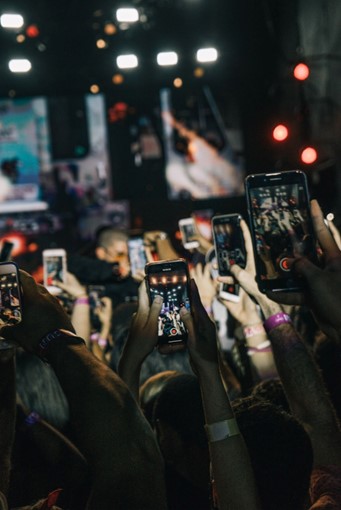
In how many ways can you hold a smartphone?
A 2021 Reviews.org survey of 1,000 American adults, reported by PhoneArena, found an average of 262 phone checks per day. Among respondents, 80% checked their phone within ten minutes of waking up, 70% used it while on the toilet, and 40% used or looked at it while driving. Frequent everyday use means smartphones must maintain…
-

mmWave affects the entire 3GPP standard
5G, as well as previous generations of cellular communication, relies on standardized communication protocols for the interactions between mobile terminal and the base station. With new and evolved features, and support of higher data rates, the complexity of the standards has increased for each new generation of mobile communication. Previous generations of cellular communication primarily…
-
mmWave and 5G – THE innovation platform for the decade to come!
Innovation is the strangest mix of slow and lightning fast. The slow part is all the tedious research done in labs and at universities, the hard (and slow) work of specifications, and the macro trends building persistently. These are all necessary enablers, but are most of the time not recognized as groundbreaking inventions, even if…
-

The main driver for mmWave is Capacity!
Many believe the main reason for introducing communication in the mmWave frequency range (24 GHz and above) in 5G-NR is to allow for use cases requiring Gb/s such as VR or AR use cases. It is true that such use cases require a lot of bandwidth not existing in current sub 6 GHz frequency bands,…